
Monument to Abulkhair Khan

Description
Historical background: Abulkhair Khan Kazhysultanuly was one of the most important statesmen in eighteenth-century Kazakh history, the khan of the Junior Zhuz, a military commander, diplomat and politician. He was born in 1693 and died in 1748.
The historical role of Abulkhair Khan is closely connected with the Kazakh people’s struggle against the Dzungar invasion. He became known for his military abilities, political determination and capacity to unite clans and tribes around a common purpose. His authority was based not only on noble origin, but also on personal courage, military talent and political influence.
In the history of Kazakhstan, the name of Abulkhair Khan is mentioned alongside such rulers as Zhanibek, Kerei, Kassym, Khaknazar, Tauke and Abylai Khans. He sought to preserve the political stability of the Junior Zhuz, protect the integrity of the land during external threats and build relations with neighbouring states.
Abulkhair Khan is buried in the “Khan Molasy” necropolis in the Aitekebi district of Aktobe Region.
Opening of the monument: The monument to Abulkhair Khan was installed in Aktobe in 2000. It stands in front of the regional akimat building on one of the city’s main avenues, Abulkhair Khan Avenue.
The location of the monument in the administrative centre of the city is symbolic. It emphasises Abulkhair Khan’s role in governance, his historical authority and his spiritual connection with the Aktobe region.
Description of the monument: The monument is a complex monumental composition consisting of a sculpture, pedestal, foundation and an elevated mound-like part. The mound is made of earth, and its front side is decorated with red granite steps. The foundation and pedestal are made of rectangular concrete blocks faced with granite.
The composition depicts Abulkhair Khan on horseback. The sculptor presents him as a commander before a decisive battle with the Dzungars, calling the people to unity and victory. The khan wears traditional clothing: a shapan, a fur hat and riding boots; a sabre hangs from his belt. He holds the horse’s reins with his left hand, while his raised right hand symbolises a call for solidarity, courage and victory.
The front side of the pedestal bears the inscription “Әбілқайыр хан”.The total height of the monument is 12.3 metres. The height of the sculpture is 2.8 metres. The pedestal is 5.8 metres long and 2.1 metres wide.
Sculptor: E. Sergeev.Architect: B. Egimbayev.
Cultural and historical significance: The monument to Abulkhair Khan is one of the most prominent monuments in the historical and cultural space of Aktobe. It reflects the history of Kazakh statehood in the eighteenth century, the tradition of defending the homeland and the importance of political diplomacy.
The monument represents not only a military commander, but also the political responsibility of a ruler during a difficult historical period. The mounted figure, raised hand, sabre and high pedestal artistically express the ideas of khan authority, courage, statehood and a call for national unity.
For residents and visitors of the city, this monument is an important place of historical memory and a sign of respect for the Kazakh khans and their role in the development of statehood.
Why is this monument important?
The monument to Abulkhair Khan recalls a period when questions of governance, military defence and political choice were decisive for the Kazakh people.
The figure of the khan is connected not only with the history of one region, but also with the complex fate of the entire Kazakh steppe in the eighteenth century. The Dzungar threat, internal political relations and external diplomacy were all processes in which Abulkhair Khan played an important role.
The monument helps younger generations understand the responsibility of leadership, the importance of unity and courage, and the need to assess historical figures fairly.
What should visitors notice?
First, notice the mounted figure of the khan. In nomadic civilisation, the horse is a symbol of freedom, movement and military strength.
The raised right hand symbolises a call to unity, the inspiration of the people at a decisive moment and the desire to lead them to victory.
The sabre at his belt emphasises the khan’s role as a military leader, while his traditional clothing connects the image with the culture of Kazakh statehood.
The elevated mound-like base gives the monument solemnity and historical weight. It allows the image of the khan to be perceived as a figure of great historical scale.
Did you know?
Abulkhair Khan was one of the most influential rulers of the Junior Zhuz in the eighteenth century.
He became known as a commander in the struggle against the Dzungar invasion.The burial place of Abulkhair Khan is associated with the “Khan Molasy” necropolis in Aktobe Region.
One of the main avenues of Aktobe is named after Abulkhair Khan.The monument is included in the state list of monuments of history and culture of local significance.
Read more:Photo gallery
Location on the map
Related sites
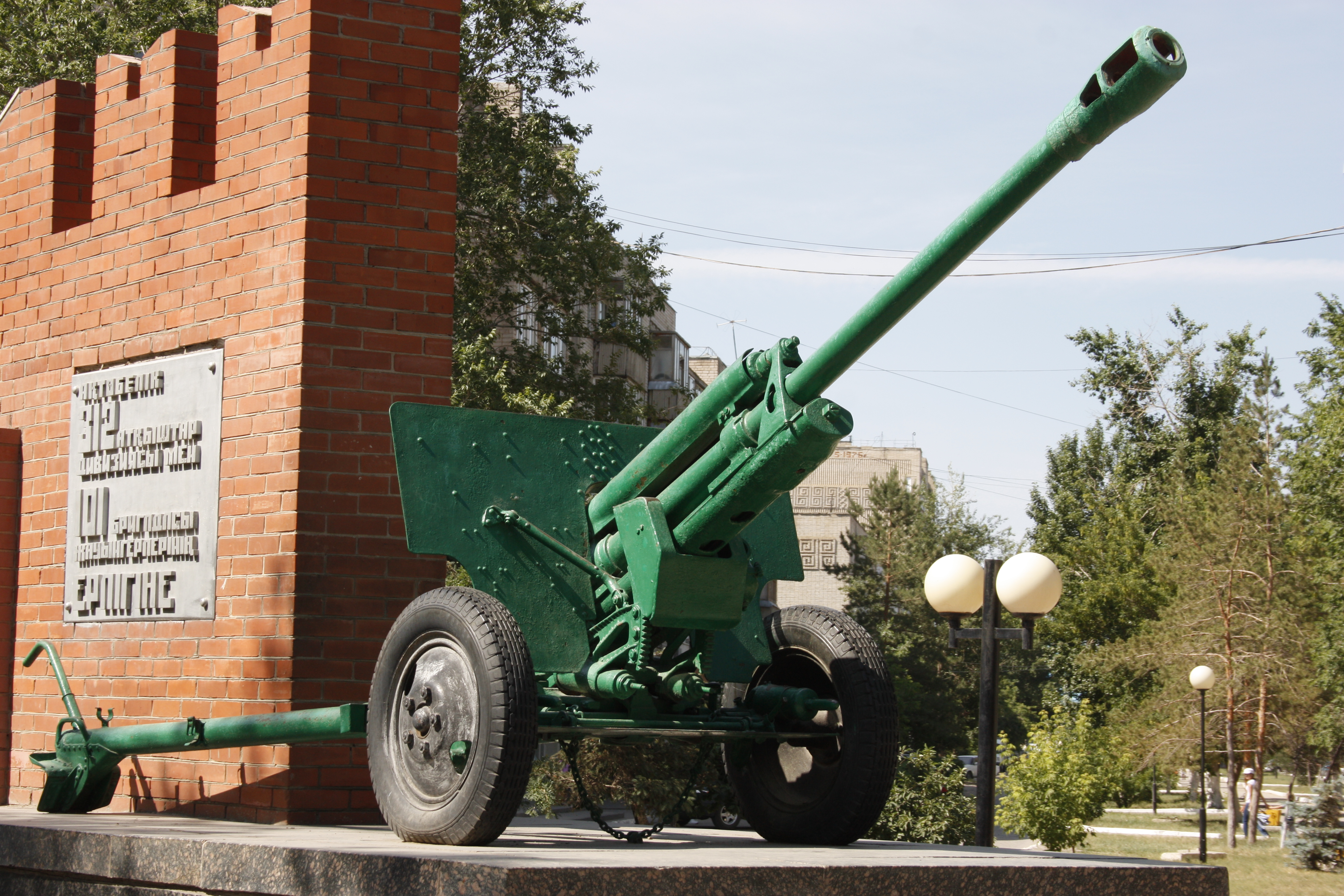 Local significance
The “Cannon” Memorial Sign Dedicated to the 312th Rifle Division and the 101st Rifle Brigade
Aktobe, Zh. Kereyev Street
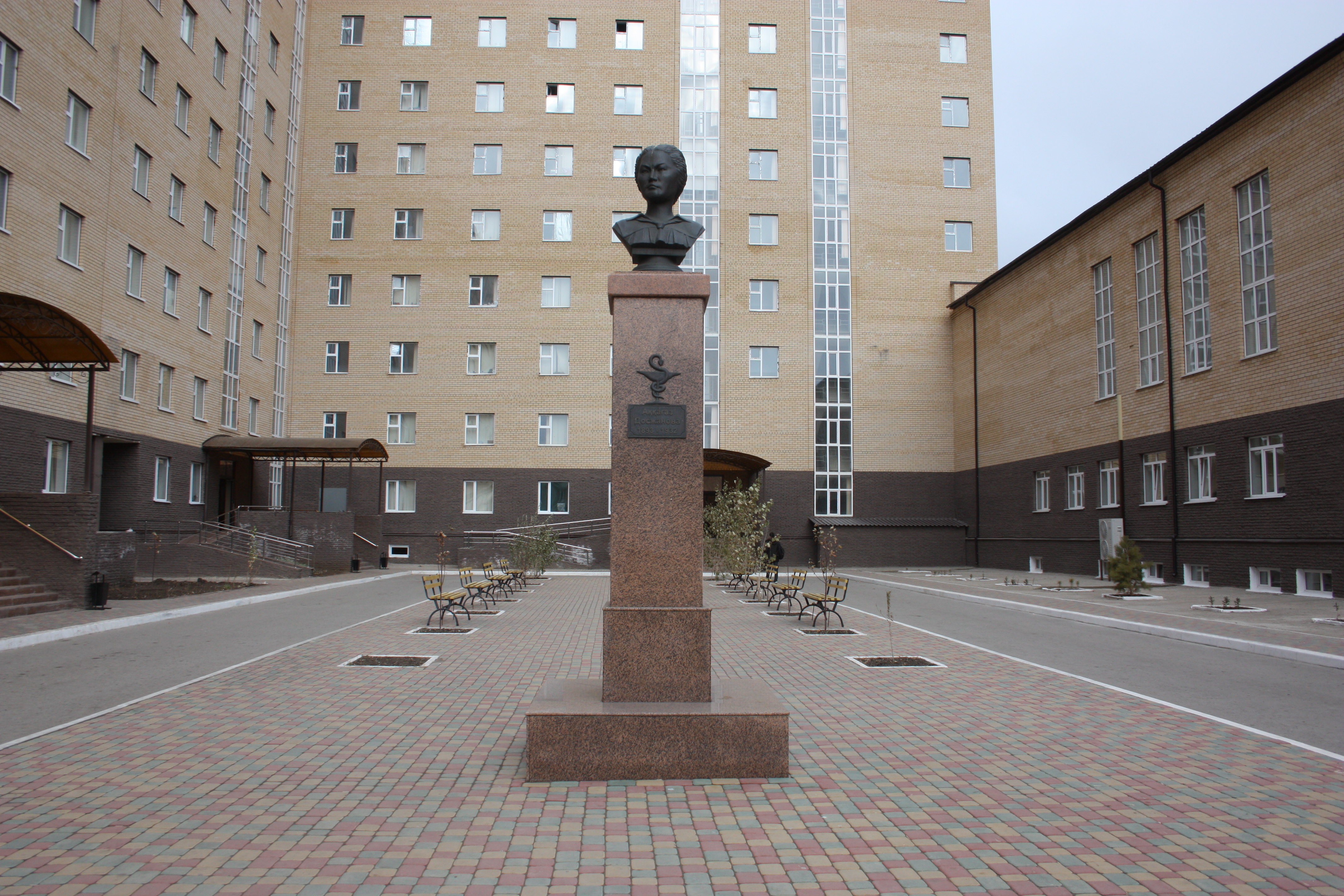 Local significance
Monument to Aqqagaz Doszhanova
Aktobe, 68a A. Doszhanova Street
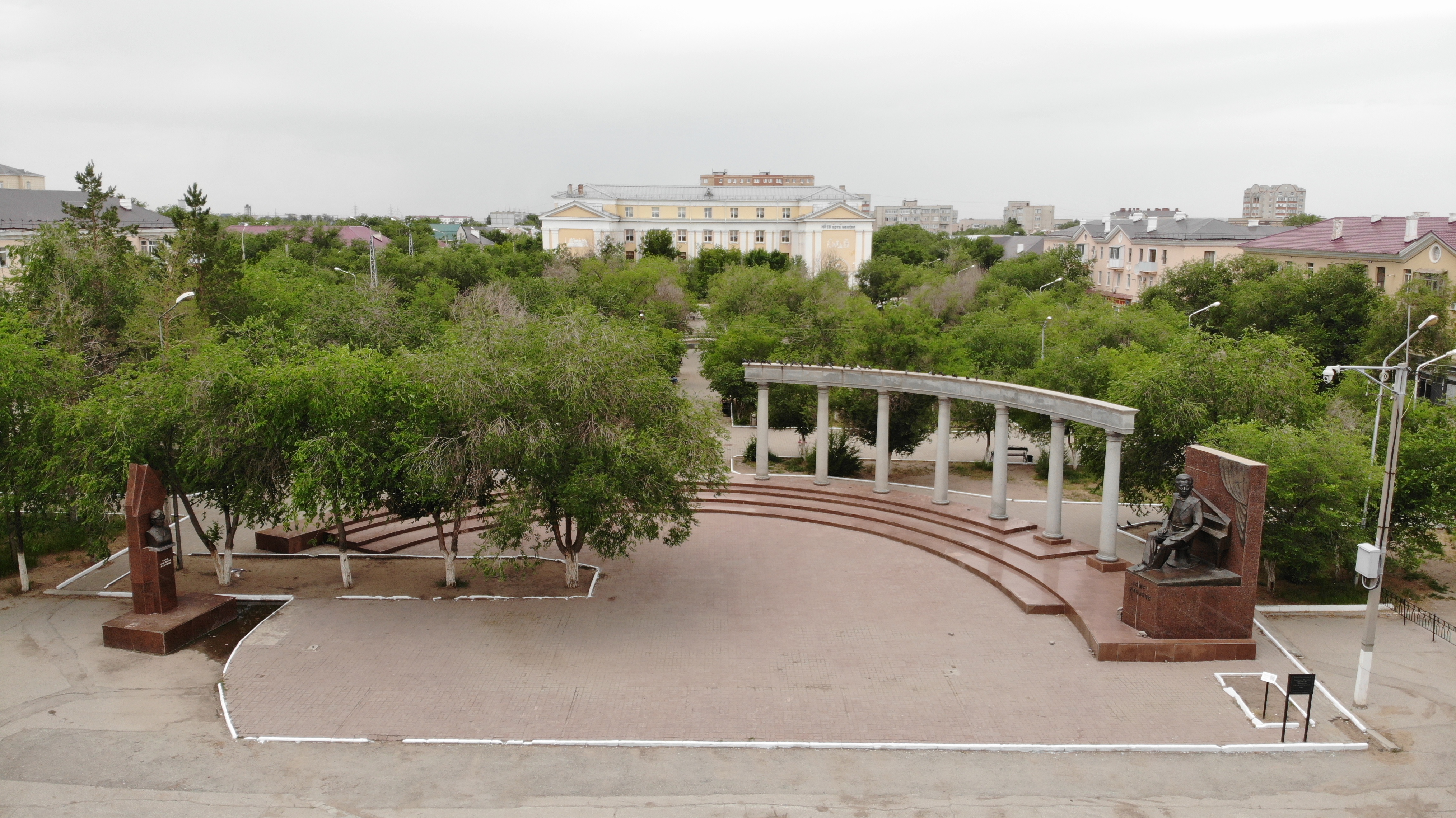 Local significance
Memorial Complex of the Monument to Composer A. Zhubanov and the Sculpture of G. Zhubanova
Aktobe, 31 Zhenis Avenue