
Memorial Complex of the Monument to Composer A. Zhubanov and the Sculpture of G. Zhubanova
Description
Historical background: Akhmet Kuanuly Zhubanov was an outstanding scholar of Kazakh music, composer, conductor, teacher, People’s Artist of Kazakhstan, Doctor of Art History, professor and academician. He was born on 29 April 1906 in the territory of present-day Aktobe Region.
Akhmet Zhubanov holds a special place in the history of Kazakh musical culture. He made a major contribution to the scholarly study, systematisation and promotion of traditional Kazakh music. His work was connected with collecting folk songs and kuis, writing them down in notation, introducing them into academic research and bringing Kazakh music onto the professional stage.
Gaziza Akhmetovna Zhubanova was a composer, professor, People’s Artist of Kazakhstan and the USSR, and one of the most important figures in Kazakhstan’s professional musical art. She was the daughter of Akhmet Zhubanov and continued her father’s creative path. Her artistic legacy includes operas, symphonies, ballets, chamber and vocal works. Gaziza Zhubanova’s music represents an important stage in the development of modern Kazakh academic music.
Opening and formation of the complex: The monument to Akhmet Zhubanov was installed in 2006 to mark the 100th anniversary of the composer’s birth. In 2007, the complex was completed with a sculpture of Gaziza Zhubanova. Thus, a unified memorial complex appeared in the cultural space of Aktobe, symbolising the artistic continuity between father and daughter.
The complex commemorates two generations of Kazakh musical culture: Akhmet Zhubanov, who systematised the national musical heritage on a scholarly basis, and Gaziza Zhubanova, who developed the modern school of Kazakh composition.
In 2026, to mark the 120th anniversary of Akhmet Zhubanov, Aktobe hosted cultural and scholarly events, exhibitions, concerts and educational programmes. The anniversary offered a renewed understanding of his exceptional role in shaping national musical culture.
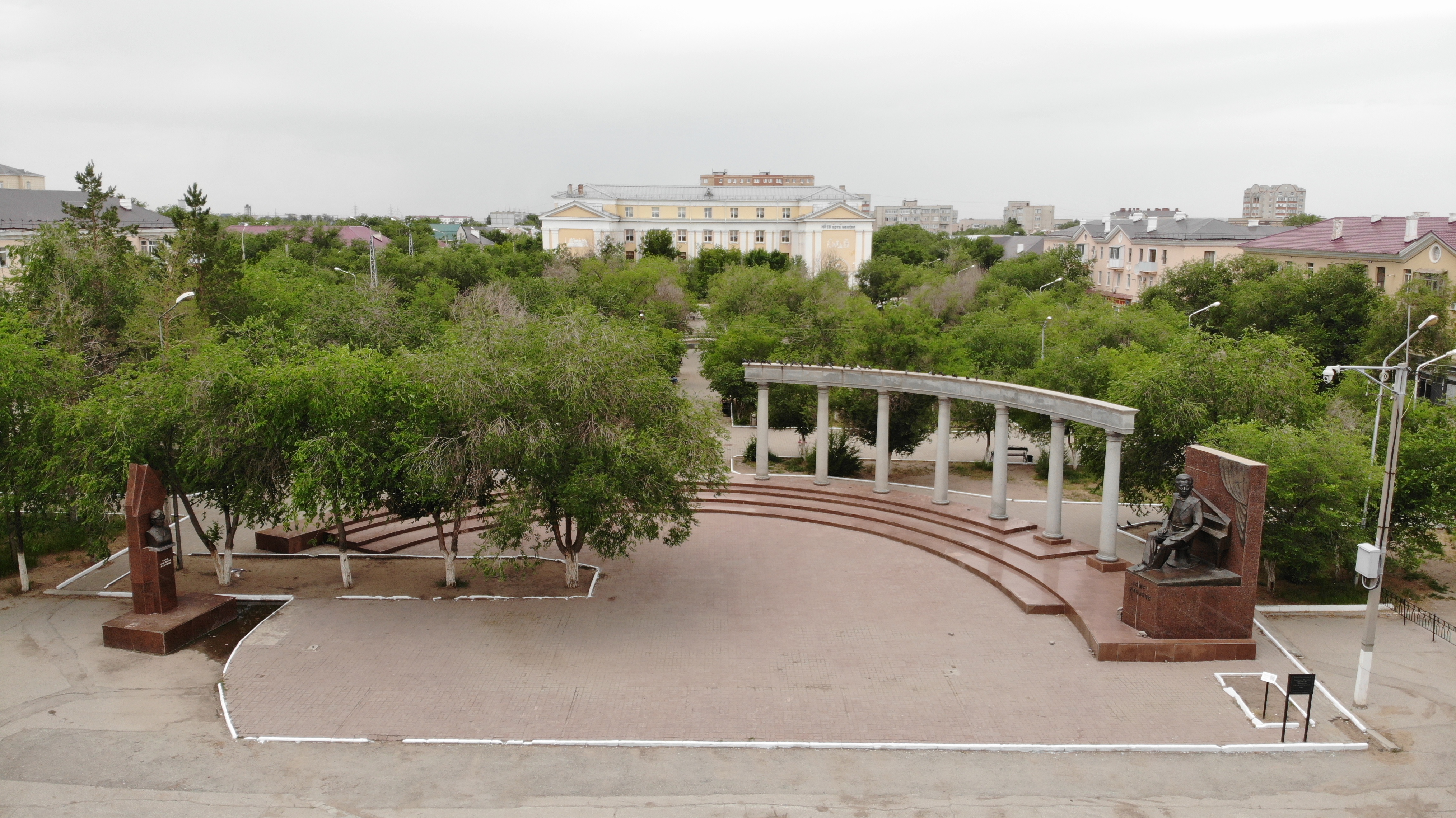
Description of the monument: The monument to composer Akhmet Zhubanov is cast in bronze. He is depicted in a conductor’s suit, seated at a piano, holding a conductor’s baton in his right hand. The image conveys concentration and creative reflection. The sculpture is installed on a stone pedestal faced with pinkish granite.
The pedestal is 2.9 metres long; the front width is 1.4 metres; the height of the trapezoid base is 1.55 metres. The back part of the composition is 5.2 metres high and 2.9 metres wide.
On the left side of the complex there is a semicircular four-step stylobate faced with pinkish granite, with a total diameter of 38 metres. Seven columns, each 7 metres high and faced with light marble, are installed on it.
At the left edge of the semicircle, opposite the monument to Akhmet Zhubanov, the sculpture of Gaziza Zhubanova is placed on a pedestal faced with pinkish granite. Her image artistically represents the composer who continued her father’s musical legacy.
Authors:
Monument to Akhmet Zhubanov: sculptor — E. Sergeev; architect — Zh. Ainabekov.Sculpture of Gaziza Zhubanova: sculptor — Zh. T. Kenbay.
Cultural and historical significance: This memorial complex is an important cultural landmark in Aktobe. It reflects the historical continuity of Kazakh musical art and shows the development of the national professional music school.
Akhmet Zhubanov stood at the origins of the scholarly study of Kazakh music, the preservation of folk heritage and the development of professional music education. Gaziza Zhubanova continued this tradition in new symphonic, operatic and chamber genres, raising Kazakh music to a modern academic level.
The commemoration of father and daughter within one memorial space is a rare and expressive phenomenon in the history of Kazakh culture. The complex symbolises the continuity of generations, the strength of creative heritage and the spiritual role of music in the life of the nation.
Why is this monument important?
This memorial complex visually presents the history of the formation of professional Kazakh music.
Akhmet Zhubanov studied folk songs and kuis, systematised them and raised the national musical heritage to a professional level. Gaziza Zhubanova continued this path and gave Kazakh music a new artistic and modern sound.
The complex encourages respect for music, national heritage and creative work. It is not only a monument, but also a silent chronicle of Kazakh music expressed through monumental art.
What should visitors notice?
First, notice the thoughtful image of Akhmet Zhubanov at the piano. The composition presents him not only as a composer, but also as a conductor, researcher and thinker who systematised the musical heritage of his people.
The conductor’s baton in his right hand symbolises his role as an organiser and guiding force in the development of professional Kazakh music.
The seven columns strengthen the solemn character of the complex and create a sense of musical rhythm in space. The placement of Akhmet and Gaziza Zhubanova within one composition emphasises the continuity between father and daughter, tradition and a new creative stage.
Did you know?
Akhmet Zhubanov made a major contribution to the formation of the Kazakh orchestra of folk instruments.
He collected, notated and studied Kazakh folk songs and kuis.Gaziza Zhubanova is one of the most outstanding women composers in the history of Kazakh professional music.
Read more:
- Adilet. State list of monuments of history and culture of local significance in Aktobe Region.
- Qazaqstan Tarihy portal. 15 facts about Akhmet Zhubanov.
- Kazinform. Composer Akhmet Zhubanov’s 110th anniversary.
- Gov.kz. Exhibition “Akhmet Zhubanov and His Era” opened in Aktobe.
- Gov.kz. Festive evening “The World of the Zhubanovs”.
- Egemen Qazaqstan. Gaziza Zhubanova: personality and legacy.
Photo gallery
Location on the map
Related sites
 Local significance
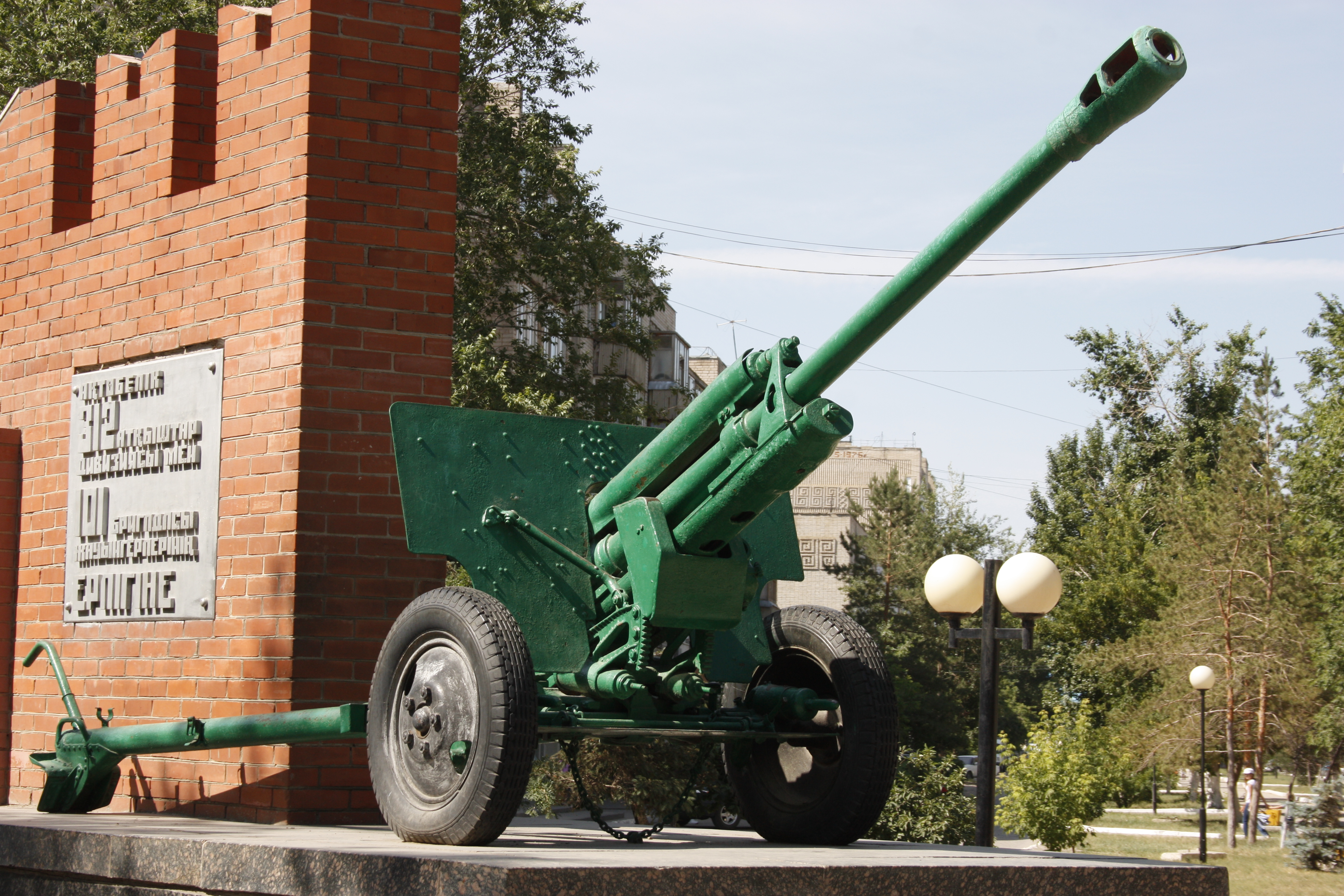
The “Cannon” Memorial Sign Dedicated to the 312th Rifle Division and the 101st Rifle Brigade
Aktobe, Zh. Kereyev Street
 Local significance
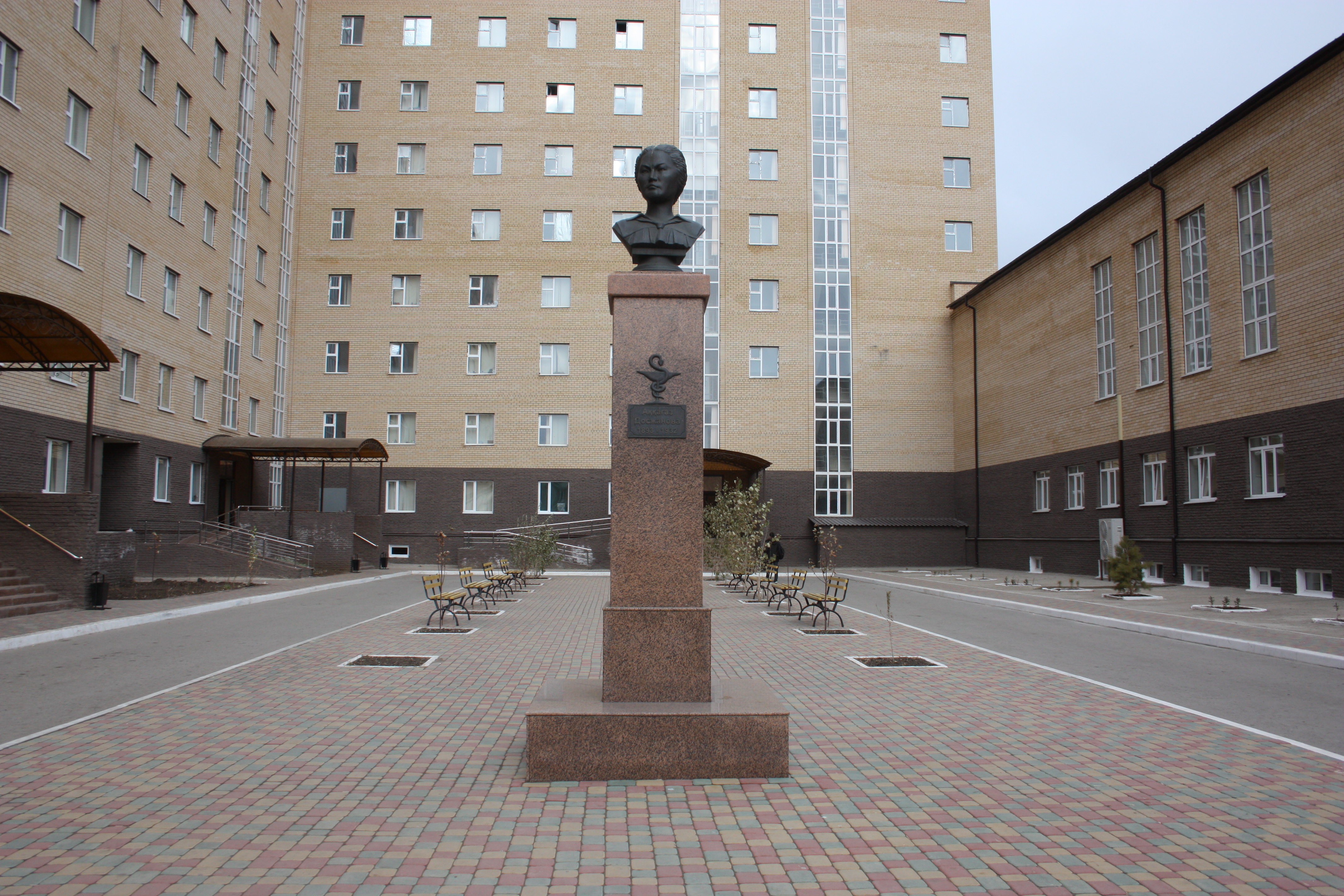
Monument to Aqqagaz Doszhanova
Aktobe, 68a A. Doszhanova Street
 Local significance
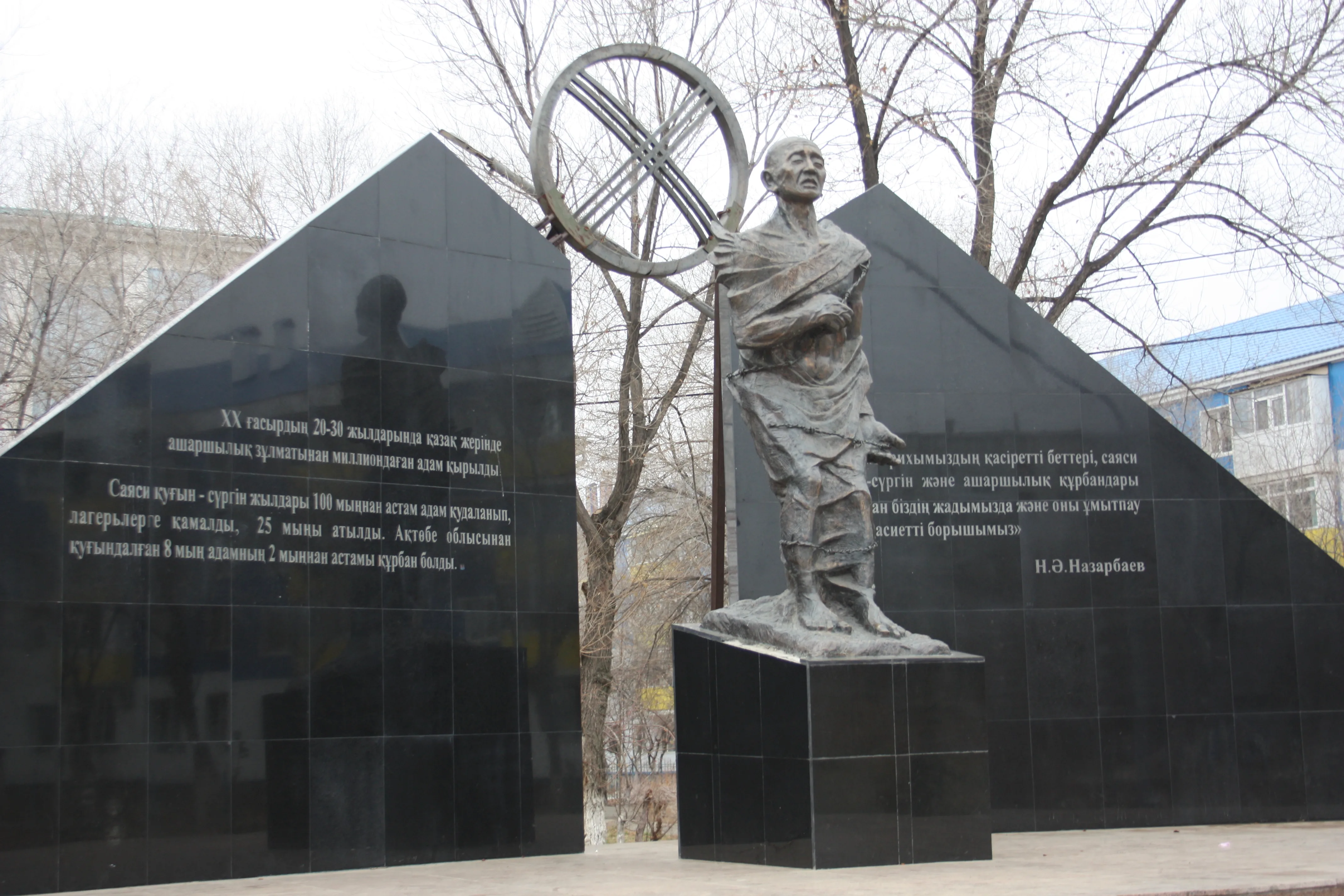
Memorial Sign to the Victims of Famine and Political Repression
31 Zhenis Avenue, rear square of the city House of Culture